WHAT OUR WORRY TELLS US:
- brittbryan1001
- Mar 10, 2024
- 5 min read
My Response to Senator Katie Britt’s SOTU Response.
Like many people, I struggle with anxiety.
I like to at least feel that I am in control; but lately, much in my life is totally out of my control. As a result, my anxiety is more active these days.
It’s fine, I’m in therapy.
Here’s the thing for me: if I am in control, then I have a pretty good idea of where things are going and I feel good about that.
But when I am not in control, anything can happen. This could lead to utter chaos. Which inevitably ends with me going down the rabbit hole in my brain, conjuring up all the possible outcomes and how I can prevent or navigate each scenario. This may or may not end in a panic attack or an eczema flare-up. Or both.
In other words, I worry. And so, anxiety is just another word for “worry.”
But, this is totally normal, I think. We worry about things and people we love, right? I mean, if we didn’t worry, then how would they know we care about them?!
And so we worry about their protection and wellbeing. We worry about the future. What if they get hurt? What if I get hurt? What if what I want to happen doesn’t happen? What if this situation ends badly? What if they are making a mistake??? What if I’m making a huge mistake? I am terrified of where this might lead…
In other words, I’m afraid. And so, worry is just another word for “fear.”
Anxiety. Worry. Fear.
Research says 85% of what we worry about never actually happens. Mark Twain said something similar:
“I've had a lot of worries in my life, most of which never happened.” - Mark Twain
Wow, wasn't that super helpful? I am sure we are all less anxious now, right?
Not quite. Something like 20-40% of Americans have an anxiety disorder (it just depends on your source, there’s a lot of conflicting info out there about how you define "anxiety disorder"). But these numbers make the point: loads of us are anxious. We are all worried and afraid about something and we tend to think about and talk about our worries and fears A LOT.
In fact, I was having a conversation very recently with someone I deeply respect, admire, and trust. She was asking about all the things going on in my life and I began sharing how I'd been stressed and just overwhelmed with worry... When something became crystal clear to me:
Worry is the opposite of faith.
If that doesn’t sit well with you, just know it doesn’t sit well with me either. I’ve been trying to debunk that revelation ever since it rudely let itself into my thoughts without an invitation.
And I also realize the whole “worry is the opposite of faith” thing isn’t new or unique with me. Lots of people have said this - or preached it - over the years. But it made no difference in my life.
Until now.
So, I have clearly been wrestling with this topic of worry a good bit lately. Which is why I was so impacted by the remarks made by Katie Britt the other night. Britt, a senator from Alabama (a state that’s really on a roll in the news lately…), was tasked with giving the Republican Party’s response to President Biden’s State of the Union address.
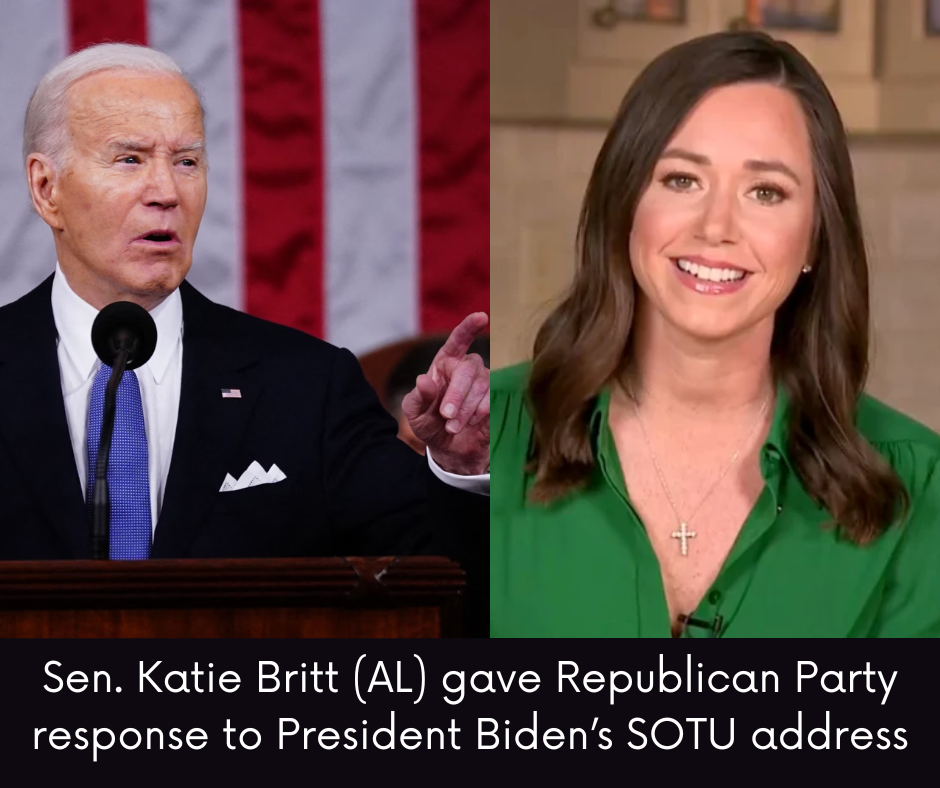
I have nothing to say about Biden’s speech, nor Britt’s response. There is enough criticism on the matter already, no need to add my own. And I simply have no interest in tearing down another woman.
This post is not about politics at all. This post is about WORRY.
And “worry” was the central theme of Britt’s speech. Which would not have struck me as odd at all, if not for the enormous cross hanging from her necklace.
Clearly someone who identifies as a Christian, Britt spoke about praying around the kitchen table with her family. She also spoke of “worrying” at the same table and communicated her deep sense of anxiety and fear over the state of America.
Britt said the word “worry” four times in the first two minutes. Yes, I counted. (You can read her speech here if you're interested.)

As I’ve already established, I worry a lot, too. So I am not judging her for having her own worries.
But I was unsettled by how affected she seemed to be by her worry.
And it felt like a wake up call for me in my own life, with my own worries. It made me want to evaluate how much space I allow worry and fear to take up in my life and in my heart.
And it was also a good reminder for me to pay close attention to politicians who use their "Christian faith" as a platform to support their interests, but then inject fear and hatred into their language and messaging at the same time. Because when that happens, the Christian faith that they claim to uphold is no longer even recognizable.
But this is what sells. This is what gets people to go out and “vote their Christian values.” And this is what happened the other night with Katie Britt’s speech.
And that's why I wanted to write this blog in response. Because as Christians, if we are living our lives in step with Jesus, then we know good and well that worry and fear have no place in God’s Kingdom.
Sometimes we just need to be reminded of that.
Anxiety. Worry. Fear.
These are topics that can dominate our lives, if we allow them that control. And anything that takes our full attention from being image-bearers of God is a threat not only to our own hearts and minds, but also to the message of the gospel. That is why worry is the opposite of faith.
The biblical authors had to have known this would be the case; that we would worry incessantly. That must be why these topics are covered so thoroughly throughout the Bible.
Do you know how many times the Bible tells us not to be afraid? (Some people will tell you that the Bible says “do not fear” 365 times; once for each day out of the year. Well, this isn’t exactly true. Don’t shoot the messenger! You can look it up on biblegateway.com.)
The words FEAR or AFRAID are used well over 500 times in the Bible, which I think still makes the point! (I only looked at the NIV translation for reference.)
We were not given a spirit of fear; of this we can be sure.

And so, I think we are now left to consider these questions:
If my anxiety is at an all-time high, then how is my faith?
How much does my worry weigh me down? How much does your worry weigh you down?
How can we turn these worries over to God in faith and trust?


Comments