WHAT DO YOU MEAN WHEN YOU SAY “SIN?” - PART I
- brittbryan1001
- Feb 11, 2024
- 7 min read
Updated: Mar 5, 2024
And what is sin? How should we think about sin? Why does it matter?
If you grew up in a religious home or have any experience with Christianity, you probably have your own scarring "sin story." Here’s mine:
The year was 2003, what should have been my senior year of high school. I ended up graduating a year later due to some complicated health issues...and a surprise pregnancy.
My then-boyfriend and I were far too young to be parents, but our families, while initially shocked and certainly none-too-thrilled, insisted that we get married.
I realize now that they believed they were being supportive. But the reality at the time was that we had to marry; we could not just live together to raise our child, because that would be “living in sin.”
So, we got married. Then a couple years later, we got divorced.
Divorce seems to be a lot more acceptable today, but back then, at least in many religious circles, it was still viewed as a sin.
So, here I was, in a situation caused by my own sin. And my attempt at gaining some kind of redemption eventually ended up in another kind of sin.
I am not saying premarital sex (or pregnancy), living together before marriage, or even divorce are sins. I'm also not saying they're not sins. I am not here to cast judgment on any of that. Planks and specks and all...
(One more disclaimer: I love my family dearly and still love his family dearly. We have a great relationship. We all just did the best we could with what we had at the time.)
Here's why I tell this story: I was only twenty years old, and felt I had racked up a lifetime of sin. My only choice, obviously, was to turn my back on a life of faith. First, because I felt like a hypocrite and second, because I felt totally unworthy.
It was a massive blow to my sense of self-worth.
And so, I understand firsthand how our ideas of sin, when misunderstood, can do real damage in our lives and can destroy our faith. And even though my faith and relationship with God is the most important thing in my life today, it was quite a long and unnecessarily painful journey to get here.
My hope is that by sharing our stories and talking about the concept of sin openly and honestly, maybe we can develop a healthier understanding of it.
Maybe your story isn’t quite that dramatic, or maybe it’s more dramatic. Maybe you have no story at all and just find the entire concept of sin to be arbitrary and frankly, laughable.
Which, I get. Think about the caricatures you’ve seen of angry, red-faced preachers going full-on “sinners in the hands of an angry God” from the pulpit. You can’t help but kinda roll your eyes and laugh, right? It’s become a joke.
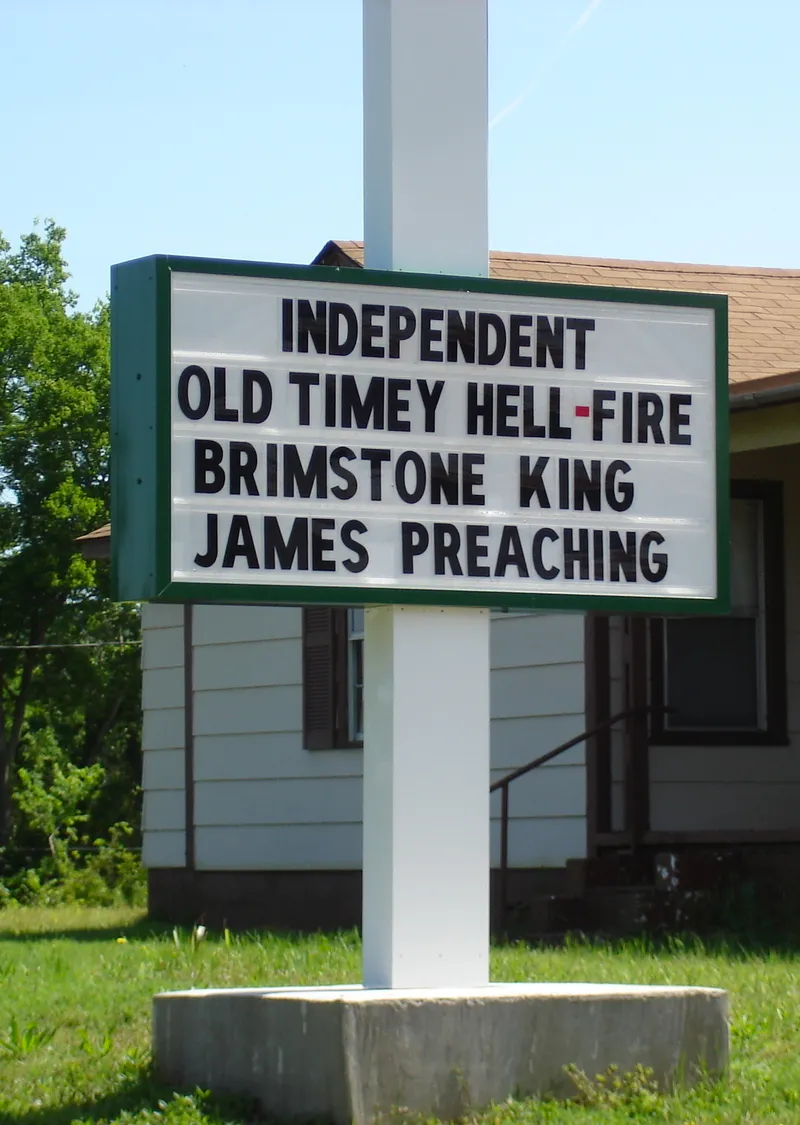
But there was a time when being deadly serious about sin was an effective approach for inspiring good behavior. Think of Catholics going to confession and doing Hail Mary’s, or Protestants praying to God to forgive them for their sins. Or even the idea of karma from Hinduism, which is the idea that what you do has eternal consequences.
But that is pretty much lost in today’s world. Sometimes I think that’s a good thing. The "fire and brimstone" style of preaching has turned many people away from religion because it reeks of hypocrisy and self-righteousness.
Yet other times, even despite my own personal story about sin, I wonder if the pendulum has swung too far in the other direction and now everything is permissible and “all is grace.” Like, ALL.
We have become so soft on sin and so scared to be called judgmental in today’s world, that we have entered an era of complete permissiveness.
I am just making the point that in the past, we went too far in the direction of hyper-focusing on sin; but we have arrived at a moment where we don’t even think about it at all. The result is a fuzzy kind of faith. I have noticed that the confusion and lack of clarity is causing people to just walk away from Christianity.
To be clear, I am not promoting a return to judging people harshly for their sin, nor am I suggesting we continue to leave sin out of the conversation entirely and ONLY talk about grace.
It’s not either all sin or all grace.
What I am saying is that I don’t think we can truly understand either without understanding both. And I believe we can have a more complete understanding of grace if we can cultivate a healthier concept of sin.
Which leads to our question for today: What do you mean when you say sin?
How we answer that will inevitably lead to other questions like: Okay, so what is sin, then? How should we think about sin?
And because that is already a lot of ground to cover, part 2 of this blog will ask questions like: What does the Bible say about sin? What does it mean that Jesus died for our sins, and how are we saved from our sins? Where does grace come in? Why does any of this matter for how I live my life?
My goal is not necessarily to provide answers. Rather, my goal is to ask these questions to prompt thoughtful consideration about our understanding of sin. To find a middle road between being too intense about sin and ignoring it altogether. And to simply share from my experience where and how I have arrived on the matter.
So, let’s get into the first round of questions.
WHAT DO YOU MEAN WHEN YOU SAY SIN?
First, we must sort through our preconceived notions about the concept of sin before we can go any further. So, I took to the internet and also asked some friends to see people’s different definitions of “sin.”
Here is a sampling of what I received:
“Sin is not living up to God’s perfect standard.”
“Anything that hurts yourself or someone else.”
“Sin is anything that goes against God’s will for us.”
“I view sin as knowing what you are doing isn’t right and doing it anyway. I think a lot of times people ‘sin’ unknowingly, so I don’t know if I would consider it a sin at the end of the day.”
“Willfully choosing a lesser good over a greater one.”
“Sin is any action, belief, or thoughts that are opposed to the ordinance of God.”
“First, which sin are you referring to? The noun or verb? The Hebrew or Greek translation? But in broad and simple terms, sin is anything that harms us or others. This would include with words, with acts, and even with thoughts.”
“Doing anything against Christ’s command to love your neighbor as yourself. Devil’s in the details though.”
“The Bible defines sin as: ‘Whosoever committeth sin transgresseth also the law: for sin is the transgression of the law.’”
So….that clears it up.
I like and appreciate these definitions, personally. For the most part, I think they are all accurate. (I do take issue with the first one, but it came from the internet so I am not judging or insulting any of my friends!)
But, these definitions all lead to other questions. Like, what is God’s perfect standard or will? What is the greater good, exactly? What’s God’s ordinance? What is the law? If the Devil is in the details…what are the details?!?
Don't worry. I have no plans to tackle that set of questions. I am just making the point that it’s murky. There is not really a universal understanding of sin.
My hope with the rest of this blog is to get us a little closer to defining and understanding sin.
OKAY….SO, WHAT IS SIN?
The dictionary definition of sin is “an immoral act considered to be a transgression against divine law.”
The dictionary is not really helpful, though, because sin is a religious concept. The above definition implies first that you must know what divine law is, and second, that you understand the difference between moral and immoral behavior.
So, it might be easier to start with what sin is NOT.
“Sin” is not merely “doing bad things.”
And avoiding sin is not about “following the rules” or jumping over some arbitrary moral high bar. Nor is it even about ensuring that we go to heaven when we die.
The New Testament Greek defines sin as "missing the mark." Other words sometimes used in place of "sin" are "wickedness," "transgression," "iniquity" or "moral failure."
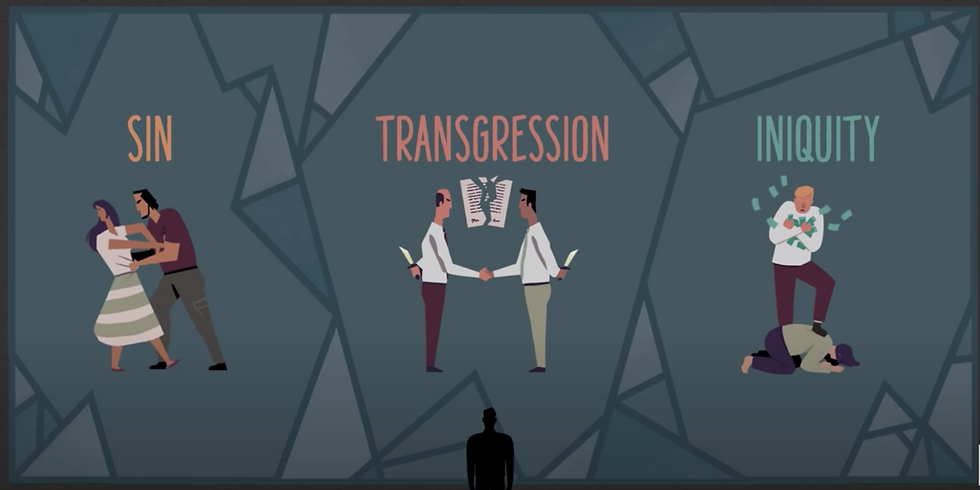
Photo cred: The Bible Project. Check out what they have to say about “sin.”
Stated another way, we are guilty of sin when our actions or words (or thoughts or even desires) displease or insult God.
Well, this brings up even more questions. What is the mark? What’s the target goal? How do we know what displeases and insults God?
Some of that will be covered in the next question.
HOW SHOULD WE THINK ABOUT SIN?
The way I personally view sin is anything that separates me from God.
In other words, when I make choices that harm my ability to experience and live within my full created intent, it causes me to be separated from God – which is not the way it’s supposed to be.
The story the Bible tells is that humans were created for a purpose: to be God’s image-bears, and reflect that image to one another and to creation…and then to reflect that divine image back to God in worship. And Israel was the people group that God chose to set that example. To show the world how things were meant to be.
“The idea of sin is that humans were made for a purpose, that Israel was made for a purpose, and that humans and Israel alike have turned aside from that purpose, distorted the vision, and abused their vocation.” - N.T. Wright
This is more than some theoretical symbolic ideal. This call to be "image-bearers" was meant to be our human vocation. And in that sense, we have failed at our job and have become separated from God. The way things were meant to be is not the way things are as a result of sin.
Another way of saying this is that sin inevitably leads to exile, which is a major biblical theme all throughout Scripture.
The theme of exile is highly fascinating and deeply important for us to understand as Christians who want to have an authentic and meaningful faith and relationship with the Bible. I will dig more into how exile plays out in the Bible in part 2, but I think we've done enough work for now!
In part 2, I will also get into the remaining set of questions. Questions like:
What does the Bible say about sin? What does it mean that Jesus died for our sins, and how are we saved from our sins? Where does grace come in? Why does any of this matter for how I live my life?
THAT'S the really interesting and important stuff, so be sure to come back for that!
Books I have found to be helpful on the topic of sin:
Not the Way It's Supposed to Be: A Breviary of Sin by Cornelius Plantinga, Jr.


You are correct that we do not talk about "sin" as much as we did growing up. This is a good reminder it is still an important topic that one should spend more time reflecting on. So very proud of you and your work.