SUCH A TIME AS THIS:
- brittbryan1001
- Jul 15, 2024
- 6 min read
Updated: Jul 22, 2024
Ways Christians can respond in violent times.

Photo: © Evan Vucci/AP
In my last blog, I wrote about how 80% of Americans see our country as more divided than united, and I appealed to Christians to pave the way of healing that divide. Because in our polarized nation, restoring unity has never been more important.
Even more so now, in light of Saturday’s events, when a shooter attempted to assassinate former President Trump as he spoke to his crowd of supporters, and killed an innocent bystander in the process.
Many political leaders and reporters in the media are warning of the dangers of turning up the already-too high temperature of our political discourse in the aftermath of what happened (or worse, what nearly happened). President Biden said in his remarks yesterday that, “Unity is the most elusive goal of all, but nothing is as important as that right now,” as he pleaded for people not to jump to conclusions or make judgements about the shooter’s motive or affiliations. And the reason he had to make that plea is because it’s become a pattern in our country to respond to situations like these with more violence.
And violence always begets violence.

And so what I want to do now is speak directly to fellow Christians about our response to violence in times like these.
As many on both sides of the political aisle have said in these last couple of days, there is no place for violence in the democratic process. Ideally, there is no place for violence in our world.
But we must be realistic. And the reality is that we find ourselves in a political environment that is contentious on a good day and downright flammable more days than not. We find ourselves in a moment in time which, in my view, bears resemblance to Haman and Mordecai in the book of Esther. And I think we can learn something from Mordecai’s encouragement of Esther in this story.

Without rehashing the whole narrative, the relevant thing to know here is that Haman was a close confident and political advisor to King Xerxes of Persia. Haman had developed a rivalry (to put it lightly) with another political leader named Mordecai, who was Jewish. So, Haman decides to get King Xerxes to issue an edict, killing all the Jews, to settle his personal vendetta against Mordecai. And Xerxes wife, Esther - who is secretly Jewish and has just become Queen of Persia and also just so happens to be the niece of Mordecai - does this incredibly brave thing to save her people.
Esther was absolutely terrified at the risk she was considering taking, which is when Mordecai says to her,
“But who knows, maybe you were made queen for such a time as this?” - Esther 4:14
People like to quote that line without the queen part and say, “Perhaps you were made for such a time as this?” And I like that better, myself. It’s not what scripture actually says, but I think it makes the same point and it allows this story to speak into our lives and situations today. It allows us to ask ourselves that question, and then to ask an even deeper question which is, are we trusting God in our situation?

And here’s the point I am trying to make to all of us, but especially to those of us who refer to ourselves as Christians: Perhaps you and I, perhaps those of us who strive to model our lives after Jesus, or at least try to walk in his ways and do our best to follow his teachings, perhaps we were made for such a time as this?
For such a time of deep division. Such a time of name-calling, bulling, and hatred modeled by our leaders. Such a time of suspicion, deception, and fear of those who are different. Such a time of cancel culture and “us vs. them.” Such a time of worry and, “Is it safe to go here?” and “Is my child safe at school?” Such a time of mass shootings and senseless violence over petty disagreements. Such a time like Saturday. Like today.
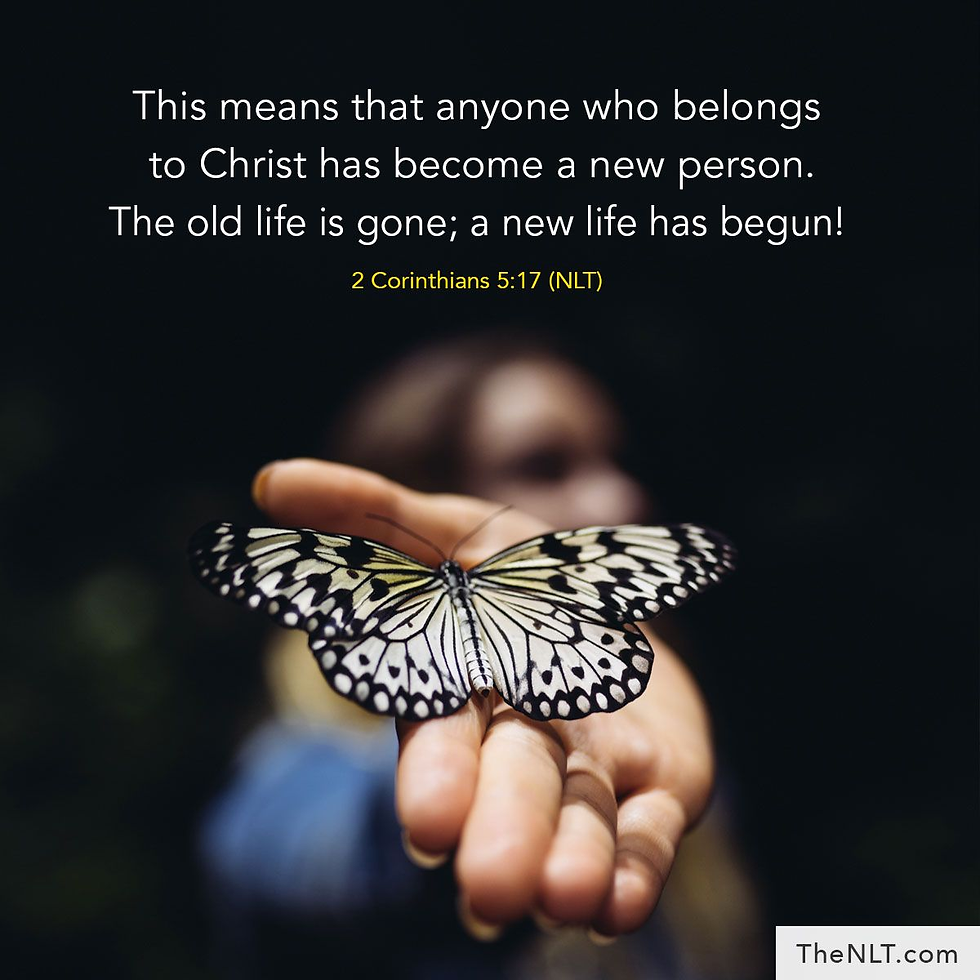
Jesus faced the same kinds of power structures and oppressive violence in his day. And his life teaches us there is a better way, in and through him. And if we believe that we were made new in Christ, it means that the old ways are done. The way of living in line with the world’s concept of power is done. The way of sin, the way of greed, the way of oppression, the way of anger, the way of violence.....it’s done.
Because we are a new creation in Christ, who better to help lead this country and this world into a new era? A new way? A new creation?
I know I am being idealistic, and I know I am not saying anything, well….new.
But Jesus did come to make all things new, and with his death and resurrection, he opened the door for us to live in that new reality, on earth now as it is in the heavens. Can we say with confidence that we are living in light of that glorious invitation? Certainly not.
But then there are moments like these that are clarion wake-up calls to snap us out of complacency and back into our vocation as image-bearers of God. To reset our priorities and prompt us to turn back toward the highest law of all: to love God with all of our heart, soul and mind, and to love our neighbor as ourselves.

Okay, fine. Maybe we aren’t going to be like Esther and literally risk our lives to lead our nation to safety. But I believe we as Christians have a crucial role to play. And there are realistic things we can do in this moment to channel our inner-Queen Esther.
We have an opportunity to put our faith into action in a very real way - by leading the way in showing how to love and treat our enemies. With a kind word (and maybe simply a kind nod if we can’t think of something kind to say). By responding with gentleness and generosity in our interactions with people, especially with the ones we are not politically aligned with.
By leading us away from anger and back towards unity, we can change the narrative that has plagued this nation for the last many years. Because yes, in our justified anger, we can toss lighter fuel on the already-flaming pile; or, we can be a healing balm of de-escalation and love.

And so, when you feel angry about or defensive of what happened on Saturday (or just what’s happening in our country in general), or you are tempted to argue politics and get into a battle of blame, or even when you just aren’t sure how to respond, one last strategy might be to think of Jesus’s last day.
When Jesus was having the last meal with his disciples, and knew that Judas was about to betray him, how did he treat Judas? (Matthew 26)
When he was in the Garden of Gethsemane, praying to his Father to take this cup from him, knowing the hour of his enemy was upon him, how did Jesus respond to his enemies? (John 18-19)
When they came to arrest him, and Peter drew his sword and cut off the ear of the slave of the high priest, how did Jesus respond to Peter? (Matthew 26:50-52)
After he was crucified and carried his own cross for his enemies to nail him to, and when they mocked and beat and tortured him, how did he respond? (Luke 23:34)

Look, I am not trying to say that we ought to passively submit ourselves to torture and refuse to defend ourselves in violent situations. But I am saying this: Jesus knew that the way to respond to his enemies was not with violence, because that would only continue the cycle of violence and death. And Jesus came to upset the world’s power structures, to break the cycle of oppression and violence, to show the world another way...a better way...the only way. The way of love.


Comments