INDIVISIBLE:
- brittbryan1001
- Jul 4, 2024
- 6 min read
Updated: Jul 4, 2024
What the early church can teach us about unity in this election season.

It’s the Fourth of July. A day to celebrate America’s independence and freedom and to commemorate our nation’s history.
To be very clear, our nation’s history is as murky, complicated, and shameful as it is victorious, revolutionary and resilient. The rights we enjoy today have not always been extended to everyone, and that cannot and should not be ignored.
But, in general and despite differences, the spirit of the 4th of July is to be a day we come together and celebrate the national identity that at its best, ties us all together under one flag. With hands over hearts, we proclaim we are “one nation under God, indivisible.”

But it’s that word, “indivisible,” that strikes me today. Because all we have to do is take a look around to see an undeniably divided nation. The media, both mainstream and social, tells a story of a deeply polarized country and a general sense of “me and my group” against “you and your group.”
According to a recent poll by the Associated Press, 81% of Americans say we are more divided than united. A reality that makes us quite literally, well, divisible.
In a time when division and hate is spreading through our country like an uncontained virus, how do we find common ground? This is the question of our generation. How can we move towards a more United States of America, especially in an election year that promises to turn up the heat of our political discourse to an all-time high?
And so, on this 4th of July, it might feel tricky to know exactly how to celebrate a divided nation. But maybe that’s because we’ve forgotten the diverse history that was the foundation on which this nation was built. Maybe we’ve fallen into the trap of believing we are more divided than we actually are.
And it occurred to me this week that maybe, those of us who follow Jesus can be part of the solution by taking a lesson from the early church in the book of Acts.
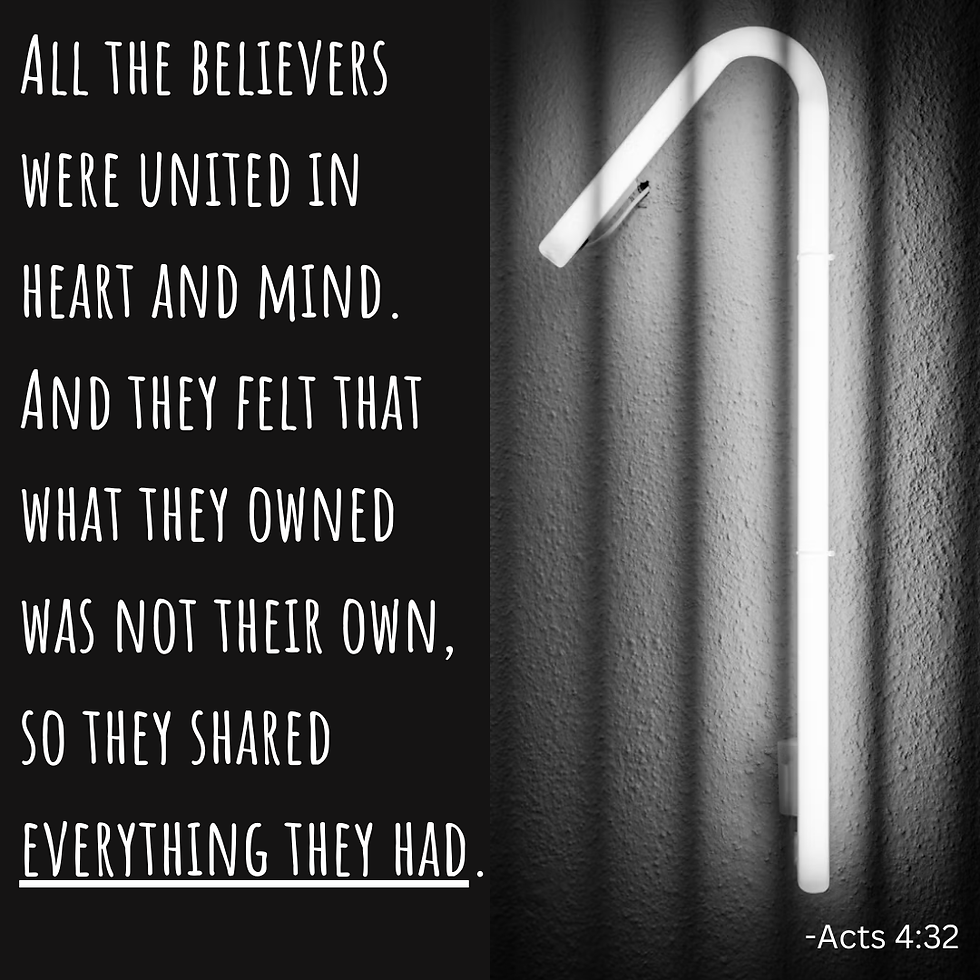
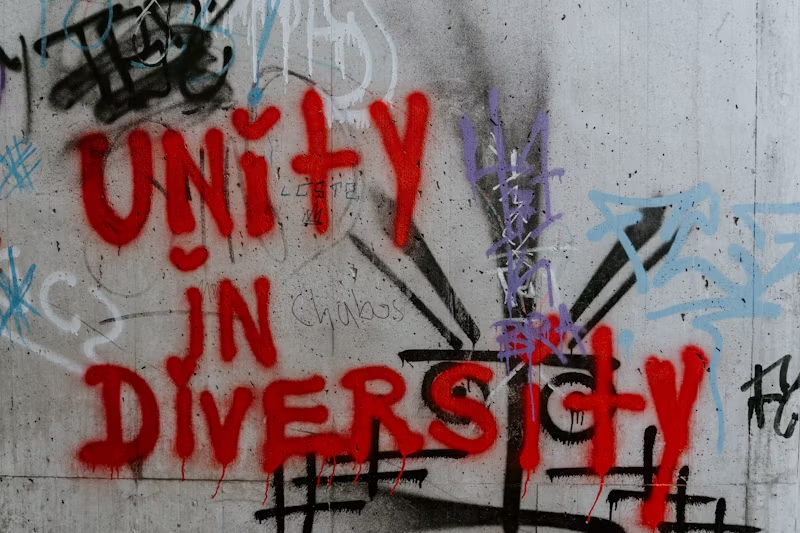
The early Christians were entirely unified. But just because they were united does not mean they were all the same. They were a multi-ethnic community full of diversity that came together and started an international movement. (Sounds a lot like America at its best to me…)
See, the earliest followers of Jesus understood that along with the freedom that came from living a new life in Christ came a responsibility to make sure there was room for everyone, even those who looked and lived differently than they did.

When people have different ideas about how things should be, it will inevitably lead to conflict and debate. It definitely did for the early churches, that’s for sure! Basically all of Paul’s letters to the churches were addressing conflicts, and then calling their attention back to the main idea: to love one another.
And the lesson for us is that if we want to maintain the freedoms we enjoy, we must learn how to not only live with and accept this diversity, but to celebrate it. And the earliest Christians understood this. They understood that to be united does not mean we must agree on everything.
And I think we actually understand this today as well, we just allow our emotional attachment to a political party to overshadow our better judgment.
In fact, the same poll that showed how Americans see our country as more divided than united also found that most Americans actually agree on the core values of our country. Values such as the right to equal protection under the law (91%), the right to vote (91%), and freedom of speech (90%). We even agree that our freedom of religion should be protected (84%).
Where we disagree and become divided is in the details of how these rights are carried out and in who gets to decide what these rights should look like for everyone.
I mean, we love the First Amendment. We value our independence, but not so much independent thinking. We enjoy the ability to openly and unapologetically voice our opinions but reserve the right to cancel anyone who disagrees. We stand for freedom, justice, and equality for all, but struggle to make room for different experiences.
“An environment that is not safe to disagree in is not an environment focused on growth - it’s an environment focused on control.” - Wendi Jade
And Christians are not exempt from this temptation to control the narrative. We love our right to freedom of religion, as long as it’s Christianity we’re talking about. (I mean, we are “one nation under God,” afterall…)
[[[By the way, did you know that the “under God” part of the Pledge of Allegiance was added 62 years after the original was written? The original had no reference to religion. Just another example of how we’ve tied religion and politics together…]]]
When we care more about passing a law to get the Ten Commandments in schools than in making sure our children get a free lunch in school; when we care more about our right to bear arms than a woman’s right to bear a child through IVF; when we care more about restricting access to an abortion for half the population than providing access to healthcare for all; when we care more about building a wall to keep certain people out than building opportunities for everyone; something has gone off the rails.
Believe it or not, I am not trying to advocate for any specific policy here. No matter what side of the political divide you find yourself on these days, the point I am trying to make is specifically for Christians. Because Christians are the one who tie their religion to their political views, which only sows more disunity and distorts the message of Jesus and leads to disastrous outcomes.
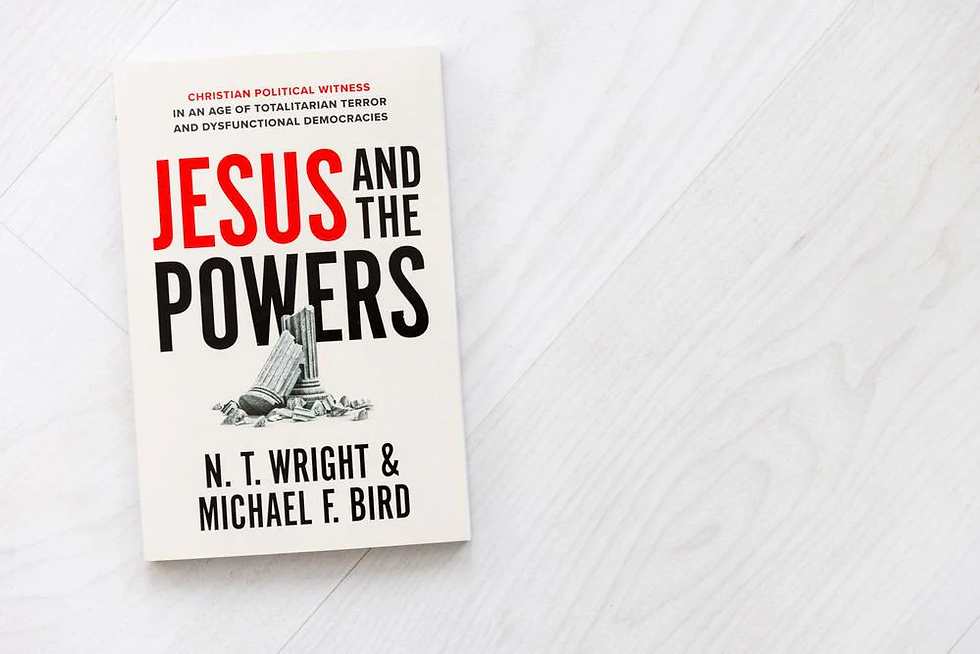
This is a point made in the new book, Jesus and the Powers: Christian Political Witness in an Age of Totalitarian Terror and Dysfunctional Democracies. NT Wright talks a lot about the tragedy of Christians getting wrapped up in a political identity rather than our identity in Christ alone, and the dangers Christian nationalism presents. (A topic I’ve written a lot about and am passionate about. See bottom of this blog for more on that.)
And so, I don’t believe that America is a nation set apart by God, because as Peter said in Acts 10:34-35, “God does not show partiality, but in every nation, the one who fears Him and does what is right is acceptable to Him.”
But some Christians tend to get hung up on defining “what is right” to figure out who is “acceptable” to God. And I think that’s what gets us into this divided mess to begin with.
Which is why I like the way The Message Version puts it:
Peter fairly exploded with his good news: “It’s God’s own truth, nothing could be plainer: God plays no favorites! It makes no difference who you are or where you’re from—if you want God and are ready to do as he says, the door is open. The Message he sent to the children of Israel—that through Jesus Christ everything is being put together again—well, he’s doing it everywhere, among everyone.”
The door is open to everyone. And through Jesus, everything is being put together again. That was the message of the early church, and it’s the message we need to reclaim today.
If we would collectively model our behavior and actions after that first Jesus community, I think we would begin to see another movement towards reconciliation and love. We would see a celebration of freedom and diversity that stems from living in the belief that we are all created to advance the kingdom of heaven in our own unique ways. And if this movement gathered enough steam, it would naturally influence all areas of life, including the political sphere. Except now it would be in order to extend love, not to control.
And so, on this 4th of July and into this election season, what if Christians in America rejected the notion that we are as divided as we’re told and actually lived as if we were one nation under God?
What if we cared more about who we invite into God’s house than who we elect to the White House? What if we lived in the belief that we are all created to advance the kingdom of heaven rather than advancing a political agenda? What if instead of asking, “how can I support my political party today?” we asked, “how can I stay in the way of Jesus today?”
And if we are not entirely sure what it looks like to stay in the way of Jesus, I love and am inspired by something American Episcopal priest and author Barbara Brown Taylor said,
“I live by the simplest, perhaps facile command that Jesus ever gave, which is to love God with the whole self and the neighbor as the self, and I find that’s entirely consuming. To do those two things leaves me very little time to do much else.” - Barbara Brown Taylor
What if we went and did likewise?
SOURCES FOR FURTHER READING:
Jesus and the Powers: Christian Political Witness in an Age of Totalitarian Terror and Dysfunctional Democracies. by NT Wright and Michael Bird
Excellent podcast by Pastor David Bryan of The New Community Church of Roswell, GA: Scripture and Politics
I list many other books and sources in other blogs I've written about Christian nationalism, like this one here. But also check out this blog. and this one and maybe this one, too...)


Comments